Outlook For Mac Dlp Add-in
On the Tools menu, click Accounts. Click the account that you want to add a delegate to, click Advanced, and then click Delegates. Under Delegates who can act on my behalf, click Add. Type the name of the person that you want to add as a delegate. Microsoft is bringing better Outlook sync tech to the Mac. By Tom Warren @tomwarren Nov 4, 2019, 9:00am EST. Microsoft is bringing some much-needed improvements to its Outlook for Mac app.
Start a new topicData Loss Prevention
Tek Bahadur
Jyotsana Nikam (7)
With Seqrite’s DLP feature, you can monitor and/or block potential sensitive data going out of the organization in a file through Data Transfer Channels like:
1. Removable Devices
2. Network Share
3. Clipboard
4. Print screen
5. Applications & Online Services
•Web Browsers (IE, Chrome, Firefox, Opera, Safari, etc.)
•E-mail Clients (Outlook, Windows Live, Thunderbird, etc.)
•Instant Messengers (Tweeter, Skype, Y! Messenger, etc.)
•File Sharing Apps (Dropbox, uTorrent, iCloud etc.)
•Miscellaneous (Team Viewer, Mobile Sync Applications etc.)
You can configure the type of data which you want to monitor such as
1.File types
•Graphic files (png, bmp, coreldraw etc)
•Office files (word, excel, PDF etc.)
•Programming files (c, pascal, xml, asm etc.)
•Other files (zip, rar, 7z etc.)
2. Confidential data
•Credit-Debit Card & Passport Numbers
•Driving License, Health Insurance
•Email, Phone Numbers
•Social Security Number(SSN)
•International Banking Account Number (IBAN)
3. User defined dictionary
You can create custom dictionary of words which you want to monitor. Files having those words will be blocked.
* Confidential & User Dictionary Data does not get blocked in subject line, message body of email or messenger communication.
* Prompts and reports will be generated if a monitored file type is being downloaded.
Follow the below steps to configure DLP:
I. Create a Group
Please visit the following link to know the procedure to manage groups and policies :
http://esupport.seqrite.com/support/discussions/topics/23000001466
II. Create a policy for DLP
1.Log on to the Seqrite Endpoint Security web console and then select Clients > Manage Policies.
2. To create a new policy, click Add.
The new policy settings screen appears.
3.In the Policy Name text box, type the policy name.
4.Click Data Loss Prevention.
DLP1
5. Select Enable Data Loss Prevention.
6. Select Display alert message when data leak is attempted if you want
to get an alert message when data leak is attempted.
7. Make the required settings/configurations as per your requirement.
DLP2
8. To save your setting, click Save Policy.
III. Apply the policy to the required group of computers
Outlook add-ins are integrations built by third parties into Outlook by using our web-based platform. Outlook add-ins have three key aspects:
- The same add-in and business logic works across desktop (Outlook on Windows and Mac), web (Office 365 and Outlook.com), and mobile.
- Outlook add-ins consist of a manifest, which describes how the add-in integrates into Outlook (for example, a button or a task pane), and JavaScript/HTML code, which makes up the UI and business logic of the add-in.
- Outlook add-ins can be acquired from AppSource or sideloaded by end-users or administrators.
Outlook add-ins are different from COM or VSTO add-ins, which are older integrations specific to Outlook running on Windows. Unlike COM add-ins, Outlook add-ins don't have any code physically installed on the user's device or Outlook client. For an Outlook add-in, Outlook reads the manifest and hooks up the specified controls in the UI, and then loads the JavaScript and HTML. The web components all run in the context of a browser in a sandbox.
The Outlook items that support add-ins include email messages, meeting requests, responses and cancellations, and appointments. Each Outlook add-in defines the context in which it is available, including the types of items and if the user is reading or composing an item.
Note
If you plan to publish your add-in to AppSource and make it available within the Office experience, make sure that you conform to the Commercial marketplace certification policies. For example, to pass validation, your add-in must work across all platforms that support the methods that you define (for more information, see section 1120.3 and the Office Add-in host and availability page).
Extension points
Extension points are the ways that add-ins integrate with Outlook. Intel graphics media accelerator 3650 drivers for mac. The following are the ways this can be done:
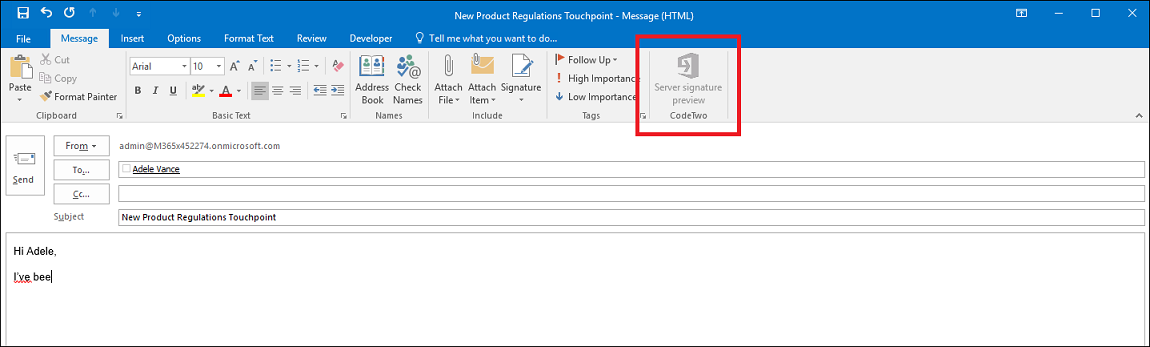
Add-ins can declare buttons that appear in command surfaces across messages and appointments. For more information, see Add-in commands for Outlook.
An add-in with command buttons on the ribbon
Add-ins can link off regular expression matches or detected entities in messages and appointments. For more information, see Contextual Outlook add-ins.
A contextual add-in for a highlighted entity (an address)
Note
Custom panes have been deprecated so please ensure that you're using a supported extension point.
Mailbox items available to add-ins
Outlook add-ins are available on messages or appointments while composing or reading, but not other item types. Outlook does not activate add-ins if the current message item, in a compose or read form, is one of the following:
Protected by Information Rights Management (IRM) or encrypted in other ways for protection. A digitally signed message is an example since digital signing relies on one of these mechanisms.
A delivery report or notification that has the message class IPM.Report.*, including delivery and Non-Delivery Report (NDR) reports, and read, non-read, and delay notifications.
A draft (does not have a sender assigned to it), or in the Outlook Drafts folder.
A .msg or .eml file which is an attachment to another message.
A .msg or .eml file opened from the file system.
In a shared mailbox, in another user's mailbox, in an archive mailbox, or in a public folder.
Using a custom form.
In general, Outlook can activate add-ins in read form for items in the Sent Items folder, with the exception of add-ins that activate based on string matches of well-known entities. For more information about the reasons behind this, see 'Support for well-known entities' in Match strings in an Outlook item as well-known entities.
Supported hosts
Outlook add-ins are supported in Outlook 2013 or later on Windows, Outlook 2016 or later on Mac, Outlook on the web for Exchange 2013 on-premises and later versions, Outlook on iOS, Outlook on Android, and Outlook on the web in Office 365 and Outlook.com. Not all of the newest features are supported in all clients at the same time. Please refer to articles and API references for those features to see which hosts they may or may not be supported in.
Get started building Outlook add-ins
To get started building Outlook add-ins, try the following.
- Quick start - Build a simple task pane.
- Tutorial - Learn how to create an add-in that inserts GitHub gists into a new message.
